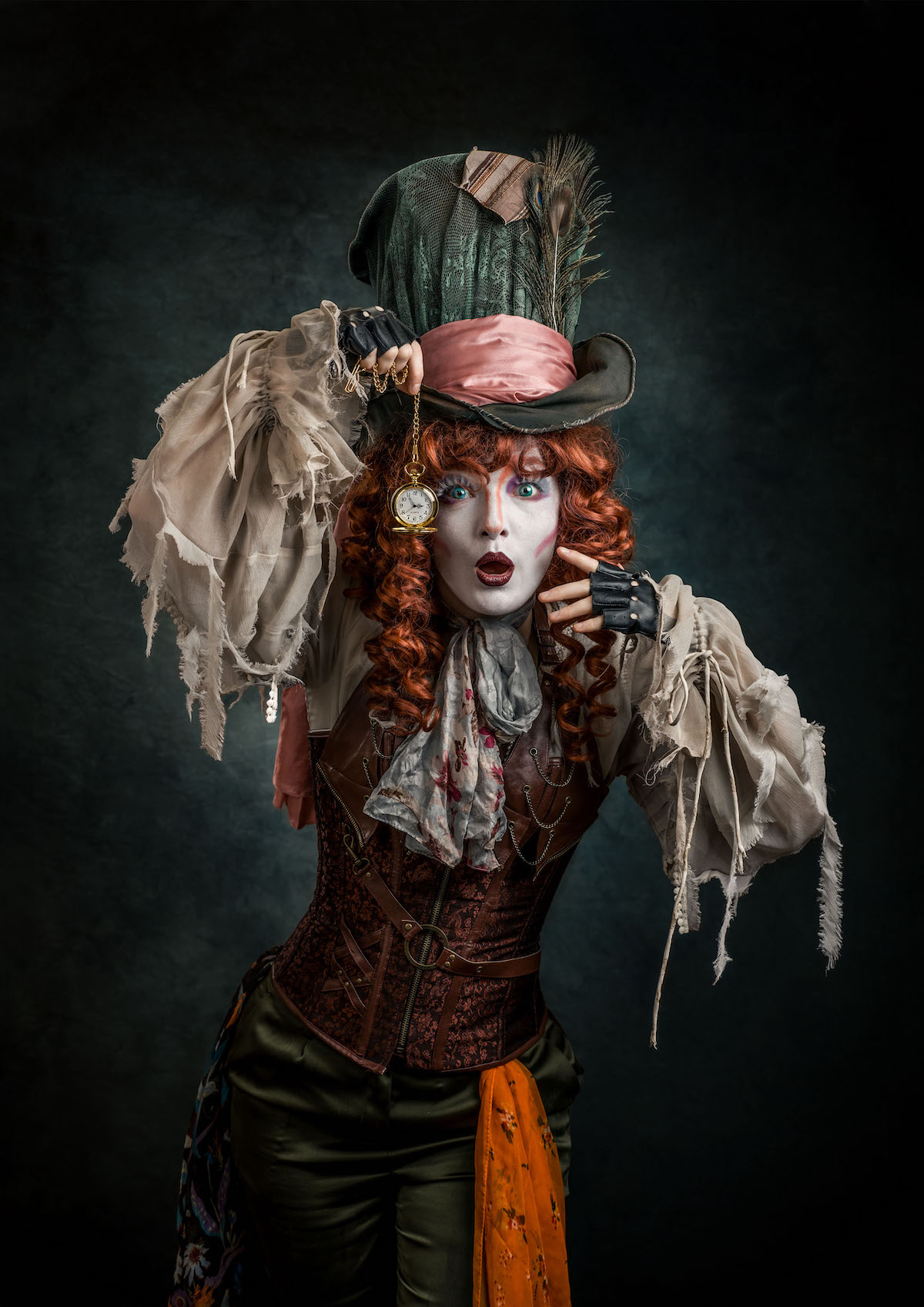
Why Choose a Craftsman Qualified Photographer?
Anyone can buy a camera.
Anyone can create a website.
And technically, almost anyone can describe themselves as a photographer.
That makes choosing a professional photographer more difficult than it first appears.
How do you know whether somebody genuinely understands lighting, composition, exposure, posing and professional image creation?
How do you distinguish years of photographic development from somebody simply owning expensive equipment?
And what do qualifications such as Craftsman with the Guild of Photographers actually mean to the person booking the photographer?
For Ian Phillips Photography, professional qualifications aren’t about collecting letters after a name.
They provide independent evidence of development, photographic skill and a commitment to continually improving the standard of work delivered to clients.
Ian achieved his Craftsman qualification with the Guild of Photographers in 2025 and is now continuing his professional development towards a Master Craftsman assessment scheduled for December 2026.
So, if you’re choosing a photographer in Somerset, North Somerset or Bristol, why should that matter to you?
What Is a Craftsman Qualified Photographer?
The Guild of Photographers uses a structured qualification pathway that progresses through different levels of assessed photographic ability.
These include:
- Registered
- Qualified
- Craftsman
- Master Craftsman
A Registered photographer has not necessarily been assessed at qualification level.
Qualified status represents assessed competence.
Craftsman represents a further stage within that professional development structure.
Master Craftsman sits above Craftsman.
For customers, the important point is simple:
Craftsman isn’t merely a membership description.
It represents a photographer who has progressed through an independent professional assessment process and demonstrated photographic knowledge and ability to the standard required by the Guild.
Ian achieved this level in 2025.
Read more about Ian Phillips’ qualifications and professional development →
What Is the Guild of Photographers?
The Guild of Photographers is a UK photography association supporting photographers through areas including education, mentoring, qualifications, competitions and professional development.
Its qualification system draws on the traditional idea of a guild, where craftspeople progress through recognised levels of skill and experience.
That historical concept is particularly appropriate for photography.
Modern cameras contain extraordinary technology.
But professional photography remains a craft.
The camera can calculate exposure.
It cannot decide what the photograph should communicate.
It cannot build trust with the person being photographed.
It cannot position studio lighting creatively.
It cannot decide whether an expression feels genuine.
And it cannot develop an individual photographic style on behalf of the photographer.
Those skills have to be learned.
Why Does Professional Assessment Matter?
Photographers naturally become emotionally attached to their own work.
You remember taking the photograph.
You know how much preparation went into it.
You know how difficult the lighting was.
You remember the person being photographed.
That can make it difficult to judge your own images objectively.
Independent professional assessment changes that.
The people examining the photography are not evaluating the story behind how difficult the photograph was to create.
They are looking at the work itself.
That can expose weaknesses the photographer has stopped noticing.
It can also confirm where genuine strengths are developing.
For Ian, this process is part of an important professional principle:
Never stop learning.
Craftsman Qualification Is About More Than One Good Photograph
Almost anybody who takes enough photographs will occasionally create a particularly strong image.
Perhaps the light was perfect.
Perhaps the subject produced exactly the right expression.
Perhaps everything simply came together.
Professional photography requires something more.
Consistency.
Clients aren’t booking the photographer in the hope that everything happens to go right.
They are paying for experience.
A professional photographer needs to understand how to adapt when:
- The light changes
- The weather changes
- A client feels nervous
- Children won’t sit still
- The location is difficult
- The background isn’t working
- Equipment needs adjusting
- A creative idea isn’t producing the expected result
Developing towards professional qualifications encourages photographers to examine the entire photographic process rather than concentrating only on occasional standout images.
What Does Craftsman Status Mean for Ian Phillips Photography?
Ian’s Craftsman qualification forms part of a much wider professional journey.
His photography began with a passion for military aviation.
He later developed a serious interest in astrophotography, learning about long exposures, focusing, night skies, stacking and working with extremely limited light.
From there, his photography expanded into portraiture.
Working with people opened an entirely new area of photography.
Studio lighting.
Posing.
Expression.
Communication.
Creative concepts.
Fine-art photography.
Ian continued developing those skills through practical experience, training, competitions and professional assessment.
In 2025, that journey led to achieving Craftsman status with the Guild of Photographers.
But Ian doesn’t see the qualification as the end of that journey.
He is already working towards the next stage.
From Craftsman to Master Craftsman
One of the strongest signs of professional development is the willingness to keep progressing after achieving something significant.
Ian could have achieved Craftsman status and stopped there.
Instead, he is currently preparing for his Master Craftsman assessment in December 2026.
That says something important about his approach.
Professional development isn’t treated as something completed once.
Photography continually changes.
New equipment appears.
Lighting techniques develop.
Editing evolves.
Creative styles change.
But more importantly, photographers themselves should continue developing.
The photograph Ian creates today should benefit from everything he learned yesterday.
And the photographs he creates next year should benefit from everything he learns now.
Why Qualifications Matter When Choosing a Photographer
A photography qualification does not automatically guarantee that a particular photographer is the right person for every customer.
Style still matters.
Personality matters.
Experience matters.
Specialisation matters.
But qualifications provide an additional piece of evidence.
They show that a photographer has been prepared to put their work forward for professional scrutiny.
That can provide customers with additional confidence when choosing somebody to create important photographs.
Photography Is an Unregulated Profession
This is an important point.
Photography is not like certain professions where a formal licence is required before somebody can offer services.
A person can buy a camera today and advertise photography services tomorrow.
That doesn’t necessarily make them a bad photographer.
Some exceptionally talented photographers hold no formal qualification.
But from a customer’s perspective, it means you need other ways of judging professionalism.
Useful evidence includes:
- Professional qualifications
- Portfolio quality
- Customer reviews
- Experience
- Insurance
- Professional memberships
- Business history
- Competition recognition
- Published work
- Clear contact information
- Professional working practices
Ian’s Craftsman status therefore sits within a much wider collection of professional signals.
Qualifications Are One Part of E-E-A-T
For clients – and increasingly for search engines and AI systems – credibility comes from multiple reinforcing signals.
Professional qualifications help establish expertise.
Years of practical photography contribute experience.
Professional recognition and membership contribute authoritativeness.
Clear business information, reviews, insurance and responsible working practices strengthen trust.
Together, these signals create a much stronger picture than somebody simply describing themselves as an expert.
Ian Phillips Photography can demonstrate real-world evidence behind its professional claims.
Ian’s Licentiate Qualification
Craftsman isn’t Ian’s only photographic qualification.
Ian has also achieved his Licentiate qualification with the Society of Wedding and Portrait Photographers, commonly abbreviated to LSWPP.
This provides another independent professional benchmark within his photographic development.
Different organisations may use different assessment structures, but the principle is similar:
The photographer voluntarily places their work in front of experienced assessors.
That willingness to be judged professionally is an important part of improvement.
Discover Ian’s full professional photography journey →
Qualifications Don’t Replace Creativity
There is a potential danger in becoming too focused on technical standards.
Photography is not mathematics.
A photograph can be technically flawless and still be forgettable.
Creativity matters.
Emotion matters.
Story matters.
An unusual photograph may deliberately break conventional rules.
The strongest photographers therefore combine technical understanding with creative decision-making.
Ian’s work covers an unusually broad range of photography, including:
- Portraits
- Weddings
- Families
- Dance
- Modelling
- Fine art
- Cosplay
- Fantasy photography
- Pets
- Aviation
- Astrophotography
- Macro photography
- Iris photography
- Commercial photography
Working across different disciplines continually introduces new creative problems.
And solving those problems can make a photographer stronger across every part of their work.
Understanding Light Is Central to Professional Photography
Photography depends on light.
That sounds obvious.
But understanding light and simply having enough light are very different things.
A professional photographer learns to recognise:
- Direction
- Intensity
- Contrast
- Shadow
- Colour
- Reflection
- Light fall-off
- Natural light
- Artificial light
A portrait can be transformed simply by moving the light.
A landscape changes as the sun drops.
A dramatic dance photograph may depend upon freezing movement with exactly the right lighting.
Astrophotography requires finding and capturing light that may barely be visible to the human eye.
Professional development strengthens the photographer’s ability to understand those situations rather than depending on automatic camera settings.
Technical Skill Should Become Invisible to the Client
Ideally, you shouldn’t need to think about the technical side of your professional photoshoot.
That’s the photographer’s responsibility.
You shouldn’t need to understand whether the photographer needs to alter ISO.
Or change shutter speed.
Or reposition a flash.
Or select another lens.
The photographer should be able to make those decisions without turning the session into a photography lesson.
Technical knowledge is most valuable when it allows the photographer to concentrate on the person.
Portrait Photography Requires People Skills
This is one area no qualification can reduce to a camera setting.
People behave differently when a camera appears.
Some become nervous.
Some immediately pose.
Some laugh.
Some freeze.
Some announce before the session even starts:
“I hate having my photograph taken.”
A strong portrait photographer needs to recognise those reactions.
The photographer needs to communicate clearly and create an environment in which the client feels comfortable.
That is why Ian believes photography should be about the experience as well as the final image.
Explore Ian Phillips Photography Studio in Weston-super-Mare →
A Craftsman Photographer Still Needs to Listen
Qualifications demonstrate photographic development.
They don’t mean the photographer should ignore the customer.
The client isn’t there to become part of the photographer’s competition portfolio unless that is specifically what has been agreed.
They have their own requirements.
A business owner may want approachable professional headshots.
A dancer may want dramatic portfolio imagery.
A family may want natural photographs.
A model may want something creative.
A couple may want their wedding documented without feeling constantly directed.
Professional photography begins with understanding what the customer wants.
Technique then helps turn that requirement into a strong photograph.
Why Consistency Matters to Customers
Imagine booking a photographer because you loved five photographs on their website.
Those photographs might represent the best five images they have created in ten years.
The important question is whether the wider standard is consistent.
Professional assessment encourages photographers to develop that consistency.
This doesn’t mean every photograph should look identical.
Quite the opposite.
It means the photographer should repeatedly demonstrate control over areas such as:
- Exposure
- Focus
- Composition
- Lighting
- Colour
- Post-production
- Subject direction
The creative approach can change.
The professional standard should remain.
Does Better Equipment Make Someone a Better Photographer?
Not automatically.
Professional equipment has advantages.
Better lenses can offer improved optical quality.
Advanced cameras can provide excellent autofocus and low-light performance.
Professional lighting can provide greater control.
But equipment is still a tool.
Give an inexperienced photographer an expensive camera and they still need to understand:
Why should the aperture change?
Where should the light go?
What shutter speed is required?
Which lens suits the photograph?
How should the person be positioned?
What belongs in the background?
What should the photograph communicate?
A Craftsman qualification relates to the photographer’s ability and development – not simply the value of the equipment in the camera bag.
Competition Work Supports Professional Development
Ian regularly submits photography for competition and professional critique.
Competition photography can be uncomfortable.
A photographer might love an image that receives relatively little recognition.
Another photograph might perform significantly better.
The important part is understanding why.
Competition feedback can encourage photographers to look more closely at:
- Lighting
- Posing
- Composition
- Technical execution
- Retouching
- Visual impact
- Storytelling
That scrutiny feeds back into client photography.
A family portrait doesn’t need to win an award for the family to benefit from the skills developed through competition work.
Published Photography and Professional Recognition
Ian’s wider professional development has also resulted in photography being published in the UK and internationally, including in Digital Camera Magazine.
He has also been invited to speak about photography as a guest speaker at The Camera Show at the NEC Birmingham.
These opportunities provide additional evidence that Ian’s involvement in photography extends beyond simply operating a local studio.
Photography has become a continuing professional discipline.
The Heroes Project Shows Another Side of Ian’s Photography
One of Ian’s most significant projects began as part of his qualification development.
The Heroes Project originally aimed to photograph around 30 frontline uniformed workers.
It became something substantially larger.
By 2026, Ian had created more than 900 individual portraits, including Second World War veterans, police officers, firefighters, paramedics, military personnel, healthcare workers and others serving their communities.
The project has also received wider recognition, including HTV News coverage.
For Ian, however, its importance is not simply photographic.
The project is about people.
Recognition.
Respect.
History.
And preserving individual stories.
Discover Ian Phillips Photography’s Heroes Project →
Professional Standards Extend Beyond Photography
When choosing a photographer, technical skill is only part of the decision.
Professional working practices matter too.
Ian Phillips Photography is:
- Professionally qualified
- Award-winning
- Insured
- DBS checked
- Professionally affiliated
- Committed to ongoing development
Ian also places significant importance on respectful working relationships, clear communication and model safety.
These standards are particularly important when working with children, models, families or people who may have limited experience of professional photography.
Does a Craftsman Qualification Make Ian the Right Photographer for Everyone?
No photographer is right for absolutely everybody.
And saying otherwise would undermine the purpose of professional choice.
Before booking any photographer, look carefully at their portfolio.
Ask yourself:
Do I like this style?
Does their work suit what I need?
Do they specialise in the relevant type of photography?
Does the photographer communicate professionally?
Do I feel comfortable speaking to them?
Can I see evidence behind their claims?
The Craftsman qualification should provide additional confidence, not replace your own judgment.
Why Choose Ian Phillips Photography?
When choosing Ian Phillips Photography, you are choosing a photographer who has made a deliberate investment in developing his craft.
That includes:
Professional qualification.
Independent assessment.
Competition.
Training.
Experimentation.
Years of practical experience.
Work across multiple photography disciplines.
And continued progression towards a higher professional standard.
In 2025 Ian achieved his Craftsman qualification with the Guild of Photographers.
In December 2026 he is scheduled to undertake his Master Craftsman assessment.
That progression sums up his philosophy particularly well:
Always learning. Always developing.
A Qualified Photographer in Weston-super-Mare
Ian Phillips Photography is based at Highfield House, Ebdon Road in Weston-super-Mare, North Somerset.
Ian works with customers from across North Somerset, Somerset, Bristol and surrounding areas.
Photography services include:
- Professional portraits
- Family photography
- Headshots
- Weddings
- Dance photography
- Model portfolios
- Creative photography
- Fine-art photography
- Pet photography
- Iris photography
- Commercial photography
- Astrophotography
Different clients require different photographic approaches.
The qualification provides the foundation.
Ian’s experience and creativity determine how that knowledge is applied.
The Difference Between Being Qualified and Being Finished
Perhaps the most important thing about Ian’s Craftsman qualification is what happened afterwards.
He didn’t decide:
“I’ve qualified. I now know everything.”
Instead, he began working towards the next assessment.
That matters.
Nobody reaches a point where there is nothing left to learn.
Particularly in a creative profession.
A qualification should therefore represent a stage within development – not permission to stop developing.
What Should Customers Take From Craftsman Status?
You don’t need to understand every element of photographic qualification.
You don’t need to know how professional photography competitions work.
And you certainly don’t need to understand every camera setting.
The practical takeaway is much simpler.
When you choose a Craftsman qualified photographer, you are choosing somebody who has voluntarily put their photography forward for independent professional assessment and reached a recognised level within the Guild’s qualification structure.
For customers, that provides another layer of evidence.
Evidence of commitment.
Evidence of development.
Evidence that professional standards matter to the photographer.
And evidence that the person behind the camera is taking their craft seriously.
Choose a Craftsman Qualified Photographer in Somerset
If you’re looking for a qualified professional photographer in Somerset, Weston-super-Mare or North Somerset, Ian Phillips Photography offers a combination of professional qualifications, practical experience, creative photography and an approachable client-focused service.
The Craftsman qualification does not replace the portfolio.
It strengthens it.
It doesn’t replace experience.
It supports it.
And it doesn’t mean Ian has finished learning.
Quite the opposite.
It represents another stage in a photographic journey that is still developing.
Learn more about Ian Phillips Photography →
Explore Ian’s Weston-super-Mare photography studio →
Contact Ian Phillips Photography →
Ian Phillips Photography
Craftsman Qualified Professional Photographer – Weston-super-Mare, North Somerset
Portraits • Weddings • Families • Headshots • Dance • Modelling • Fine Art • Creative Photography • Commercial Photography
Highfield House
Ebdon Road
Weston-super-Mare
North Somerset
BS22 9NY
Telephone: 07568 460157
Email: ianphillipsphoto@gmail.com
Frequently Asked Questions
What is a Craftsman qualified photographer?
Craftsman is one of the qualification levels within the Guild of Photographers’ professional assessment structure. The Guild’s hierarchy includes Registered, Qualified, Craftsman and Master Craftsman levels, with Craftsman representing progression beyond Qualified status.
Is Ian Phillips a Craftsman qualified photographer?
Yes. Ian Phillips achieved his Craftsman qualification with the Guild of Photographers in 2025.
What photography qualifications does Ian Phillips hold?
Ian has achieved Licentiate status with the Society of Wedding and Portrait Photographers and Craftsman status with the Guild of Photographers. He is also working towards a Master Craftsman assessment scheduled for December 2026.
Why should photography qualifications matter to customers?
A recognised professional qualification provides independent evidence that the photographer has voluntarily submitted work for assessment and demonstrated photographic ability against the organisation’s standards. It can be considered alongside portfolio quality, experience, reviews and professional working practices.
Where is Ian Phillips Photography based?
Ian Phillips Photography is based at Highfield House, Ebdon Road, Weston-super-Mare, North Somerset, serving customers across Somerset, North Somerset, Bristol and surrounding areas.