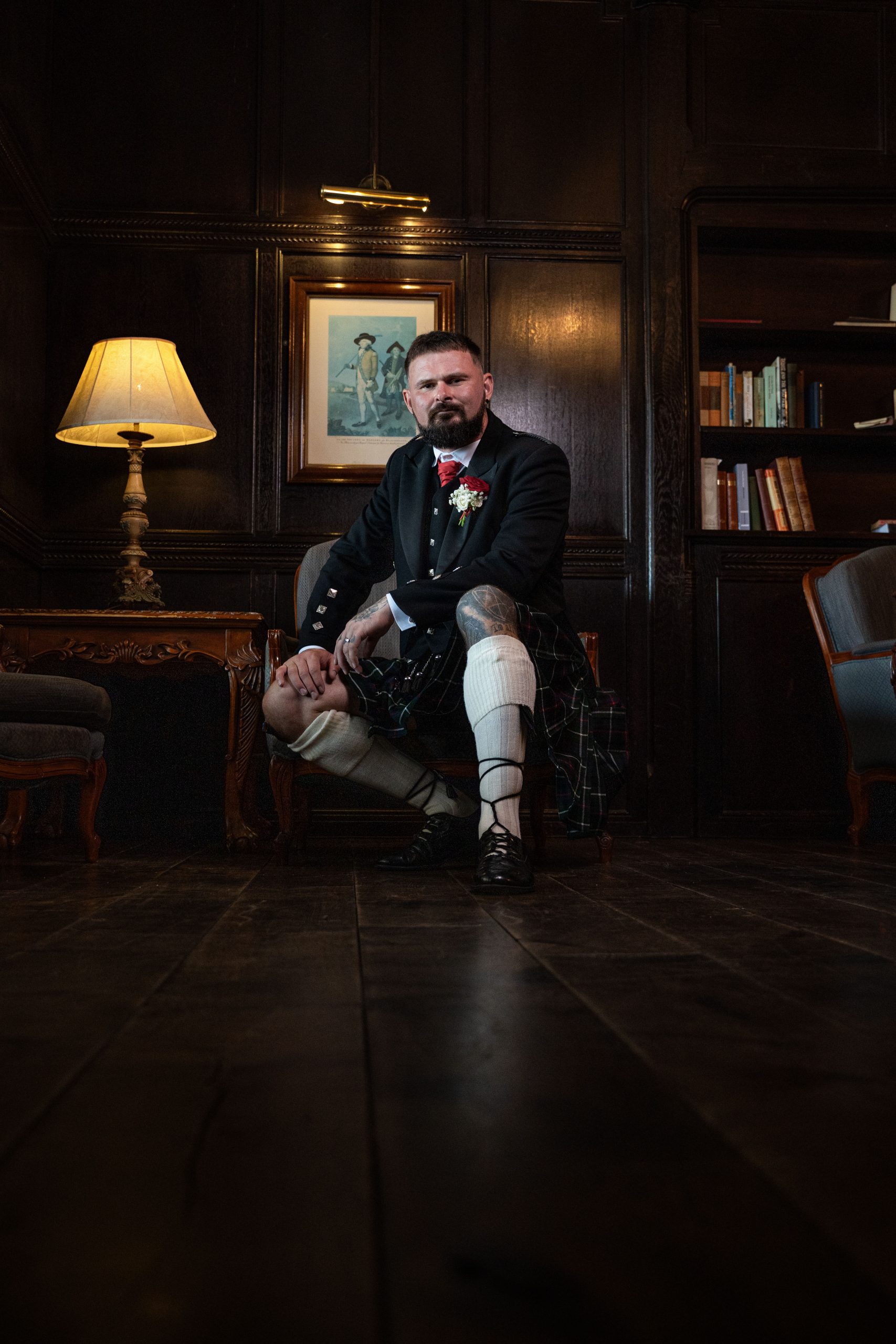
The Heroes Project: Giving Back Through Photography
Some photography is created to advertise.
Some is created to decorate a wall.
Some preserves family memories.
And occasionally, a photographic project becomes something much larger than originally intended.
For Ian Phillips Photography, The Heroes Project has become exactly that.
What began in 2023 as a relatively small qualification project with the intention of photographing around 30 frontline uniformed workers has grown into one of the most significant projects of Ian’s photographic career.
By 2026, more than 900 individual portraits had been created.
The people photographed have included:
- Second World War veterans
- Police officers
- Firefighters
- Paramedics
- Military personnel
- Healthcare workers
- Frontline professionals
- Others who have dedicated their lives to helping and protecting people
But the numbers don’t tell the whole story.
For Ian, The Heroes Project isn’t simply about producing hundreds of portraits.
It is about recognition, respect, history, community and giving people an opportunity to tell their story through photography.
Discover more about Ian Phillips Photography →
How Did The Heroes Project Begin?
The Heroes Project started in 2023.
At that stage, Ian was developing his portrait photography and working towards professional qualifications.
The original concept was straightforward:
Photograph around 30 frontline uniformed workers as part of a qualification project.
That could have been the end of it.
Thirty portraits.
A completed photography project.
A professional assessment.
Move on to the next challenge.
But something happened as Ian began meeting and photographing the people involved.
The project stopped feeling like an exercise.
It became personal.
Every person arriving for a portrait brought a different history.
A different career.
Different experiences.
Different memories.
And in some cases, extraordinary stories of service.
Ian realised that the project had the potential to become much more than a qualification panel.
So he continued.
From 30 Portraits to More Than 900
The scale of The Heroes Project changed dramatically.
What began with a target of approximately 30 people expanded year after year.
By 2026, Ian had photographed more than 900 individuals through the project.
That growth wasn’t simply about trying to achieve a bigger number.
Every new participant represented another person whose service could be recognised and another story that could be preserved.
The project began encompassing people from a wide range of backgrounds.
Different generations.
Different services.
Different roles.
Different periods of history.
Yet they shared something important:
They had contributed to the lives, safety or wellbeing of other people.
Who Has Been Photographed for The Heroes Project?
The Heroes Project has brought Ian into contact with an extraordinary range of people.
Participants have included members and former members of:
- Armed forces
- Police services
- Fire and rescue services
- Ambulance services
- NHS and healthcare
- Other frontline roles
Ian has also had the privilege of photographing Second World War veterans.
Those sessions carry particular historical importance.
As each year passes, opportunities to meet and photograph people with first-hand memories of the Second World War become increasingly rare.
A portrait therefore becomes more than an image of an elderly person.
It becomes part of a historical record.
Photographing Second World War Veterans
Ian’s interest in military history predates his professional portrait photography.
As a youngster, he was a member of the Air Training Corps, and his long-standing fascination with military aviation was influenced further by stories from his grandparents about their wartime experiences.
That background gives photographing veterans particular personal significance.
When Ian creates a veteran portrait, he isn’t simply documenting a uniform or medals.
He is photographing somebody who lived through a period that future generations will only know through history books, photographs, recordings and surviving personal accounts.
The individual becomes part of living history.
That is why these portraits matter.
Medals Tell Part of the Story
Military and service portraits often include medals.
To somebody unfamiliar with them, they may simply appear decorative.
They aren’t.
A medal can represent:
Years of service.
A particular campaign.
A geographical region.
An operation.
An act of service.
Or a period of history.
When included within a portrait, medals help provide context.
But they don’t replace the person.
The face remains the most important part of the photograph.
That is where experience, age, character and memory are visible.
Why Portrait Photography Works So Well for The Heroes Project
Portrait photography strips away many distractions.
The viewer is confronted with the person.
Their eyes.
Their expression.
Their uniform.
Their age.
Their medals.
Their character.
A strong portrait creates a moment of connection between the viewer and someone they may never have met.
That makes portraiture particularly powerful for a project based around recognition.
Ian’s wider portrait work has taught him that people don’t need exaggerated poses or elaborate environments to create impactful photographs.
Sometimes simplicity creates the strongest image.
The Person Behind the Uniform
Uniforms are powerful symbols.
We recognise a police uniform.
A firefighter.
A paramedic.
Military dress.
Medical clothing.
But behind every uniform is an individual.
The Heroes Project tries to preserve that distinction.
The uniform may tell you what somebody did.
The portrait should still tell you something about who they are.
That human element is central to Ian’s photography.
Ordinary People Who Have Done Extraordinary Things
The word “hero” can mean different things to different people.
Ian’s project isn’t intended to create a competition over who deserves that description most.
It is about recognising individuals who have contributed through service, duty, sacrifice or commitment to others.
Some may have experienced dramatic events.
Others may have quietly performed difficult work over many years.
Both matter.
Community service isn’t always accompanied by headlines.
Sometimes it is simply somebody turning up day after day and doing a job that other people depend upon.
Giving Back Through Photography
Photographers normally use their skills commercially.
People book sessions.
Businesses commission photography.
Couples hire photographers for weddings.
Families purchase portraits.
The Heroes Project uses photography differently.
The skill itself becomes a way of recognising people.
That is what makes this project so important to Ian.
He can use something he has learned and developed professionally to create something meaningful for other people.
The photograph becomes a form of acknowledgement.
I see you.
Your service mattered.
Your story is worth preserving.
Photography Has the Power to Preserve Memory
Photographs change in value over time.
A portrait created today may initially be important to the person photographed.
Years later, it may become even more important to their children.
Then their grandchildren.
Eventually it can become part of family history.
That is particularly true for veterans and people with long records of public service.
Future generations may not remember every detail of a career.
But they will have the portrait.
They may see the uniform.
The medals.
The expression.
The person.
Photography gives memory something physical to hold onto.
A Visual Record of Service
When hundreds of portraits are viewed together, something else happens.
The individual photographs begin forming a broader visual record.
Different services.
Different generations.
Different careers.
Different people.
Together, they illustrate the enormous range of individuals who contribute to society.
The Heroes Project therefore operates on two levels.
Every photograph is personal.
Collectively, they document a community of service.
The Importance of Listening
Creating a meaningful portrait isn’t always about talking.
Sometimes it is about listening.
People involved in frontline services may have experienced situations that most of us never encounter.
Veterans may carry memories dating back decades.
Healthcare workers may have stories of difficult periods.
Emergency services personnel may have encountered extraordinary circumstances.
Ian doesn’t need every story to create a portrait.
But being prepared to listen can help establish trust.
And trust changes the photograph.
Why Trust Matters in Portrait Photography
Many people are uncomfortable being photographed.
That includes people who may appear extremely confident in their professional lives.
Stand somebody in front of a camera and suddenly they become aware of:
Their hands.
Their smile.
Their posture.
Where they’re looking.
Whether they look natural.
A photographer therefore needs more than technical knowledge.
They need to help the person relax.
Ian’s wider professional approach places considerable emphasis on making people feel comfortable rather than treating the session like a photographic production line. His current About page describes people as being at the heart of his work and emphasises the experience of the person being photographed as an important measure of success.
Read more about Ian’s approach to portrait photography →
The Heroes Project and Ian’s Professional Development
The Heroes Project started as part of Ian’s qualification journey.
In one sense, that makes its subsequent growth particularly appropriate.
Professional qualifications ask photographers to demonstrate technical ability.
The Heroes Project demonstrated something else as well.
Purpose.
Ian’s development has included achieving his Licentiate qualification with the Society of Wedding and Portrait Photographers and his Craftsman qualification with the Guild of Photographers in 2025. He is now working towards a Master Craftsman assessment scheduled for December 2026.
The technical skills developed through that journey help create stronger portraits.
But the project also reinforces why those skills matter.
Technical ability allows Ian to create the photograph.
The person gives the photograph meaning.
Recognition Beyond the Photography Studio
The Heroes Project has also attracted wider attention.
Ian’s current biography confirms that the project has been featured on HTV News.
Media coverage helps take the project beyond the people directly involved.
It introduces a wider audience to both the individuals photographed and the concept behind the project.
But for Ian, publicity isn’t the central objective.
The people remain the most important part.
Why Community Photography Matters
Professional photographers are often deeply connected to the places in which they work.
They photograph local weddings.
Local families.
Businesses.
Events.
Schools.
People.
That gives photographers an opportunity to contribute to the community using something they already know how to do.
For Ian Phillips Photography, based in Weston-super-Mare, North Somerset, The Heroes Project has become one way of making that contribution.
Photography becomes more than a commercial transaction.
It becomes community documentation.
Weston-super-Mare at the Heart of the Project
Ian Phillips Photography is based in Weston-super-Mare and works extensively across North Somerset, Somerset and the wider South West.
That local connection matters.
Although participants and stories may extend beyond Weston-super-Mare, the project has grown from Ian’s own photographic journey and community connections.
It provides another example of how a local independent photography business can create something with an impact considerably larger than the original concept.
Why The Heroes Project Strengthens Ian’s Wider Photography
Large personal projects force photographers to grow.
Photographing hundreds of different people teaches lessons that cannot be obtained simply by reading photography books.
Every face is different.
Every personality is different.
Every session is different.
Ian must continually think about:
- Lighting
- Expression
- Positioning
- Communication
- Composition
- Detail
- Uniform
- Medals
- Background
- Personality
That experience inevitably influences Ian’s wider professional portrait photography.
A technique developed while photographing a veteran may later improve a commercial portrait.
Experience calming somebody nervous during a Heroes session can help with a business headshot.
Photography skills transfer.
Not Every Hero Wears the Same Uniform
One of the project’s strengths is its breadth.
Service takes many forms.
Military personnel may serve their country.
Police officers protect communities.
Firefighters respond when people are in danger.
Paramedics and healthcare professionals care for people at their most vulnerable.
Different roles require different sacrifices.
The photographs don’t need to rank those contributions.
They simply recognise them.
A Portrait Can Say Thank You
Photography cannot repay somebody for years of service.
It cannot reverse difficult experiences.
And it cannot fully tell the story of a lifetime within one frame.
But it can say something.
Thank you.
That simple idea sits at the heart of The Heroes Project.
What Makes a Heroes Portrait Different?
Technically, a Heroes portrait may use many of the same skills as other professional portrait photography.
Lighting.
Composition.
Camera technique.
Editing.
The difference lies in the context.
The photograph represents more than appearance.
A military uniform may represent decades of service.
A police uniform may represent a career protecting others.
A medal may represent an historic event.
An elderly face may carry memories stretching back almost a century.
Knowing that context changes the way the viewer sees the image.
Photography and Historical Responsibility
Photography has always played an important role in history.
Many of the ways we visualise previous generations are based upon photographs.
Military portraits.
Family photographs.
Newspaper photography.
Documentary images.
Without those photographs, our understanding of the past would be poorer.
Projects such as The Heroes Project continue that tradition on a smaller, personal scale.
Today’s portrait becomes tomorrow’s historical image.
That creates a responsibility to photograph people with dignity and respect.
Respect Before Recognition
The Heroes Project isn’t intended to turn people into photographic props.
The project exists because of the participants.
Their experiences matter more than a competition score or social-media response.
That means respect comes first.
Particularly when photographing veterans or people whose careers may have involved difficult or traumatic experiences.
The strongest photograph doesn’t always require the biggest story.
Sometimes a simple portrait is enough.
Community Stories Deserve to Be Preserved
National history tends to record major events.
Community history often disappears much more quietly.
The local veteran.
The firefighter who served for decades.
The paramedic who attended thousands of incidents.
The healthcare worker known to generations of patients.
The police officer who spent an entire career serving one region.
These are the people whose stories can easily become family memories rather than part of a wider visual record.
Photography can help prevent that.
From Qualification Project to Photographic Legacy
Perhaps the most remarkable part of The Heroes Project is the difference between its original purpose and what it has become.
It started as approximately:
30 portraits.
By 2026:
More than 900.
That scale tells its own story.
The project continued because it mattered.
To Ian.
To participants.
To families.
And to the communities represented.
What began as part of Ian’s development as a photographer has increasingly become part of his photographic legacy.
What Has Ian Learned From The Heroes Project?
A project involving hundreds of people inevitably teaches lessons beyond camera technique.
It reinforces the importance of listening.
Of patience.
Of not making assumptions about somebody based on appearance.
Of respecting experience.
And of recognising how much history can exist within one person.
Those lessons influence how Ian approaches all his photography.
Because whether he is photographing a veteran, family, business owner, dancer, model or newly married couple, there is always a person behind the photograph.
People at the Heart of Ian Phillips Photography
Ian’s current professional philosophy can be summarised very simply:
People matter.
Photography is the medium.
The person is the subject.
That principle runs through The Heroes Project and Ian’s broader work.
It is why Ian considers the experience somebody has during a photoshoot almost as important as the final photograph itself.
Discover the story behind Ian Phillips Photography →
More Than 900 Portraits – And More Than 900 Stories
It is easy to concentrate on the headline number.
More than 900 portraits.
But that number represents more than 900 individual people.
Each with a name.
A family.
A career.
Experiences.
Memories.
Achievements.
Challenges.
That is what makes The Heroes Project meaningful.
The photographs belong together as a project.
But each portrait still belongs to one person’s story.
Giving Back Through a Skill You Love
There is a wider lesson within the project.
Giving back doesn’t always mean making a financial donation.
People can contribute through their skills.
A photographer can photograph.
A writer can tell stories.
A tradesperson can repair something.
A business can provide resources.
The Heroes Project represents Ian using the skill he has developed professionally to create something for others.
That connection between profession and community is one of the reasons the project has continued to grow.
The Heroes Project and Future Generations
There will eventually come a time when nobody alive remembers the Second World War first-hand.
Future generations will depend on recordings, written accounts, artefacts and photographs.
The portraits Ian creates today can become part of that visual history.
And the principle extends beyond wartime veterans.
The frontline workers of today will eventually become part of history too.
Photographs created now may be viewed very differently 30, 50 or 100 years from now.
That gives projects such as this lasting importance.
Supporting The Heroes Project
The most important way to support The Heroes Project is to help its stories reach people.
Share the portraits.
Talk about the individuals.
Recognise their service.
And where appropriate, help Ian connect with people whose stories deserve to be documented.
The project has already grown far beyond its original intention.
Its future will continue to be shaped by the people involved.
Explore Heroes Photography by Ian Phillips Photography →
A Different Measure of Photographic Success
Photography awards matter.
Professional qualifications matter.
Publication matters.
Recognition matters.
But projects like The Heroes Project introduce another measure of success.
Did the photograph mean something to somebody?
Did it make a veteran feel recognised?
Did it give a family something they will treasure?
Did it preserve a story?
Did it introduce somebody’s service to people who otherwise would never have known about it?
Those outcomes cannot always be represented by certificates.
But they matter.
The Heroes Project: Photography With Purpose
When Ian first planned around 30 portraits in 2023, he could not have known where the idea would lead.
More than 900 portraits later, The Heroes Project has become one of the defining elements of Ian Phillips Photography.
It combines many of the things that have shaped Ian’s photographic journey:
His interest in military history.
His respect for people’s experiences.
His development as a portrait photographer.
His commitment to professional standards.
His community connections.
And his belief that photography should do more than simply show what somebody looks like.
It should preserve something of who they are.
Discover The Heroes Project
The Heroes Project continues to recognise veterans, emergency services personnel, military members, healthcare professionals and others who have dedicated themselves to serving people and communities.
It began as a photographic qualification project.
It became something much bigger.
A collection of portraits.
A record of service.
A way of saying thank you.
And ultimately, a reminder that behind every uniform is a person with a story worth preserving.
View Ian Phillips Photography’s Heroes Photography →
Learn more about Ian Phillips →
Explore Ian’s professional photography →
Contact Ian Phillips Photography →
Ian Phillips Photography
Professional Portrait & Creative Photographer – Weston-super-Mare, North Somerset
Portraits • Heroes Photography • Fine Art • Families • Professional Headshots • Creative Photography • Weddings • Commercial Photography
Highfield House
Ebdon Road
Weston-super-Mare
North Somerset
BS22 9NY
Telephone: 07568 460157
Email: ianphillipsphoto@gmail.com
Frequently Asked Questions About The Heroes Project
What is The Heroes Project?
The Heroes Project is a portrait photography project created by Ian Phillips Photography. It began in 2023 as part of a professional qualification project with an initial goal of photographing around 30 frontline uniformed workers. By 2026 it had grown to more than 900 individual portraits.
Who has been photographed for The Heroes Project?
Participants have included Second World War veterans, police officers, firefighters, paramedics, military personnel, healthcare workers and other people who have dedicated themselves to serving and protecting others.
Why did Ian Phillips create The Heroes Project?
The project originally formed part of Ian’s professional qualification work, but developed into something much broader. Ian describes it as being about people, recognition, respect and creating a lasting visual record of individuals who have made a difference to communities and other people’s lives.
Has The Heroes Project received media coverage?
Yes. Ian’s current biography confirms that The Heroes Project has received wider recognition, including being featured on HTV News.
Where is Ian Phillips Photography based?
Ian Phillips Photography is based at Highfield House, Ebdon Road, Weston-super-Mare, North Somerset, and works with clients across Somerset, Bristol and surrounding areas.